The Power of Shadowing: How to Speak Like a Native without Living Abroad
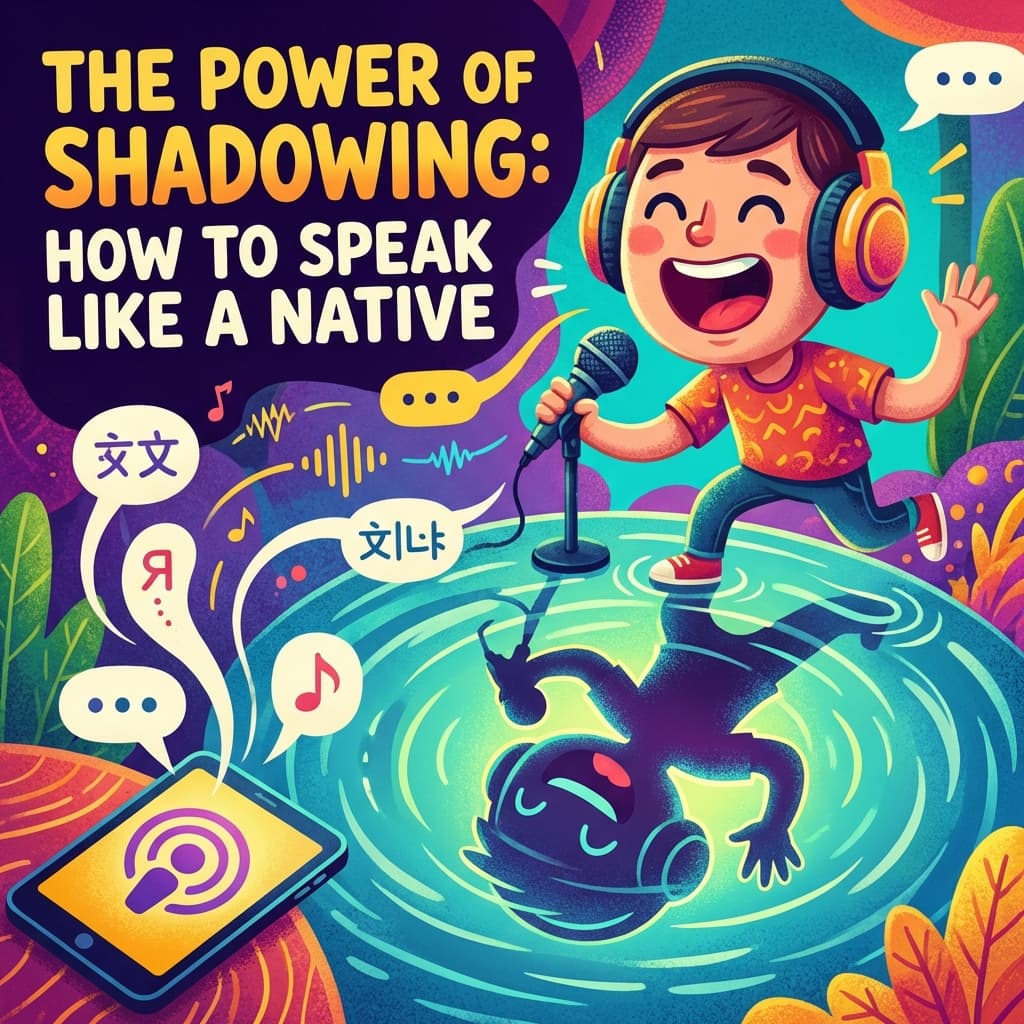
Do you understand most of what you hear but struggle to speak naturally? Does your accent feel unnatural? If so, you need to add Shadowing to your routine. Developed and popularized by prof. Alexander Arguelles, this technique is a staple in the toolkit of polyglots worldwide.
What is Shadowing?
Shadowing is an advanced listening and speaking exercise where you listen to a text in your target language and repeat it aloud simultaneously (or with a split-second delay), like a shadow following the speaker.
It sounds simple, but it is distinct from generic "listen and repeat exercises. In traditional repetition, you wait for the speaker to stop inside a pause. In shadowing, you speak while they are speaking. This forces you to match their speed, rhythm, and intonation curve exactly.
Why It Works
- Muscle Memory: Speaking is a physical act. Shadowing trains the small muscles in your mouth, tongue, and throat to produce sounds that don't exist in your native language.
- Prosody and Rhythm: Every language has a "music." English is stress-timed; Japanese is mora-timed. Shadowing helps you internalize this underlying rhythm, which is often more important for intelligibility than individual vowel sounds.
- Bypassing Translation: By speaking at the speed of the native audio, your brain doesn't have time to translate from your mother tongue. You are forced to process and produce the target language directly.
Step-by-Step Guide to Shadowing
Step 1: Choose the Right Materials
Select audio content that includes a transcript. The audio should be slightly challenging but comprehensible. Podcasts, audiobooks, or slow news broadcasts are excellent. Ensure the speaker has an accent you want to emulate.
Step 2: Blind Listening
Listen to the audio once or twice without looking at the text. Try to get the gist of the meaning and the flow of the sound.
Step 3: Text Analysis
Read the text. Look up unknown words. Understand the meaning thoroughly. You cannot effectively shadow what you don't understand.
Step 4: Shadowing with Text (Scripted)
Play the audio. While reading the text with your eyes, speak the words aloud along with the speaker. Focus on mimicking the pitch (high/low) and speed. Do this until you can keep up comfortably.
Step 5: Blind Shadowing (Advanced)
Put the text away. Play the audio and shadow it again, relying only on your ears. This is the hardest but most effective step. It requires intense focus and strengthens your auditory processing skills.