Language is Culture: Why You Cannot Separate Them
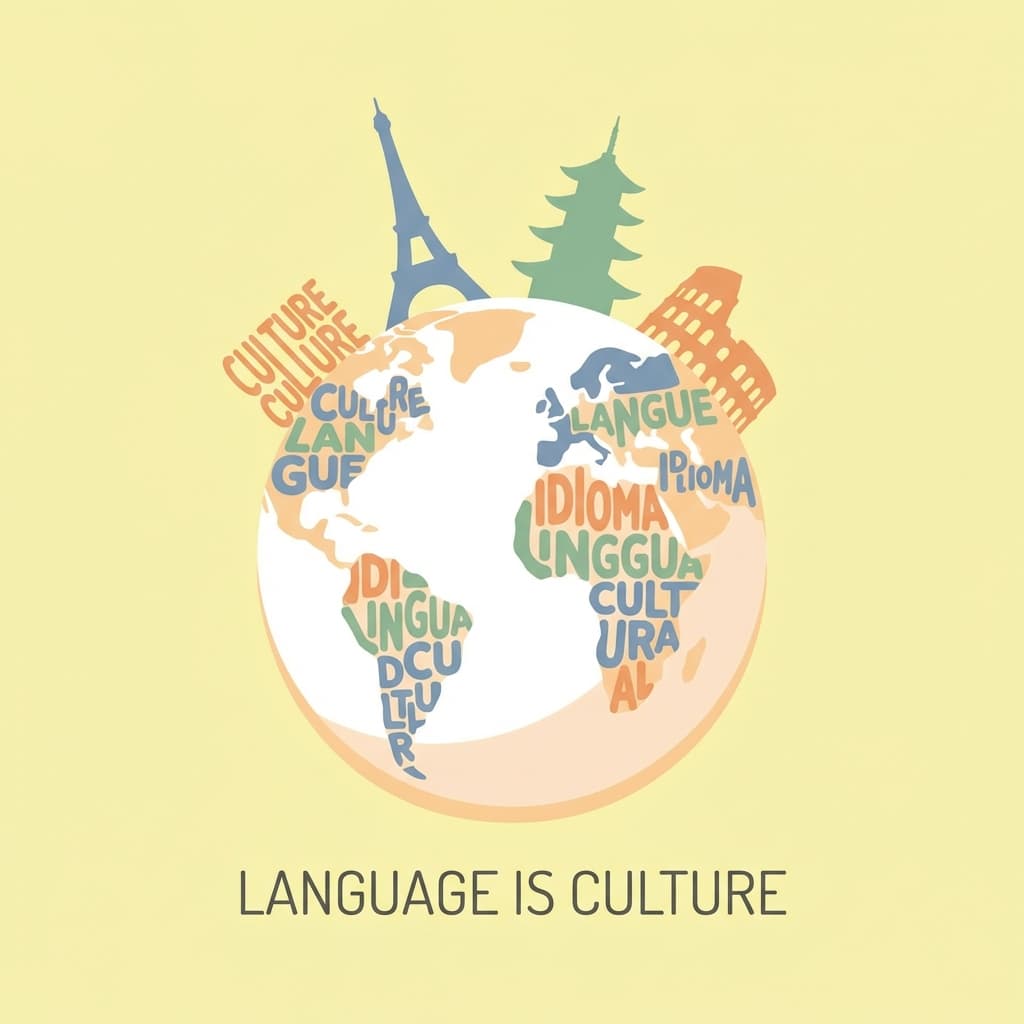
To speak like a native, you must understand their values and history. You can memorize every word in the dictionary, but if you don't understand the culture, you will still sound like a stranger.
Language is not just a set of rules; it is the collective memory of a people. Every grammar rule, every idiom, and every nuance is a fossil of history, shaped by wars, beliefs, and landscapes.
Idioms are Frozen History
Idioms usually come from history or daily life culture. Using them correctly requires cultural context.
Take the English phrase "White elephant". It means a useless, expensive possession. Why? Because in ancient Siam (Thailand), kings would give white elephants to courtiers they disliked. The animals were sacred and couldn't be worked, but cost a fortune to feed, ruining the recipient. Without this history, the phrase is nonsense.
In Korean, the phrase "eating rice cake while lying down" means something very easy (like "a piece of cake"). This reflects a culture where rice cake is a beloved, everyday treat.
The Grammar of Respect
Culture shapes grammar. In English, I say "I" for everything. "I go", "I eat", "I sleep". It reflects an individualistic culture.
In Japanese or Korean, the word for "I" changes depending on who you are talking to. Are you humble? Are you boasting? Are you male or female? The grammar forces you to constantly calculate your social distance from others. You cannot speak a single sentence without understanding your place in the social hierarchy.
Reading the Air
Some cultures are "Low Context" (like the USA or Germany). They value directness. "Close the window" means "Close the window".
Other cultures are "High Context" (like Japan, Korea, or Saudi Arabia). They value harmony. Someone might say, "It's a bit chilly, isn't it?". They aren't talking about the weather; they are politely asking you to close the window without giving an order. If you only understand the words, you miss the message.
Conclusion
You cannot separate the two. To learn a language is to adopt a new worldview. It is to step into another person's shoes and see the world through their cultural lens.