Loglingo
Back to Blog

Context is King: Why Learning Words in Isolation is a Trap

January 15, 2024Sarah Kim
Context is King: Why Learning Words in Isolation is a Trap

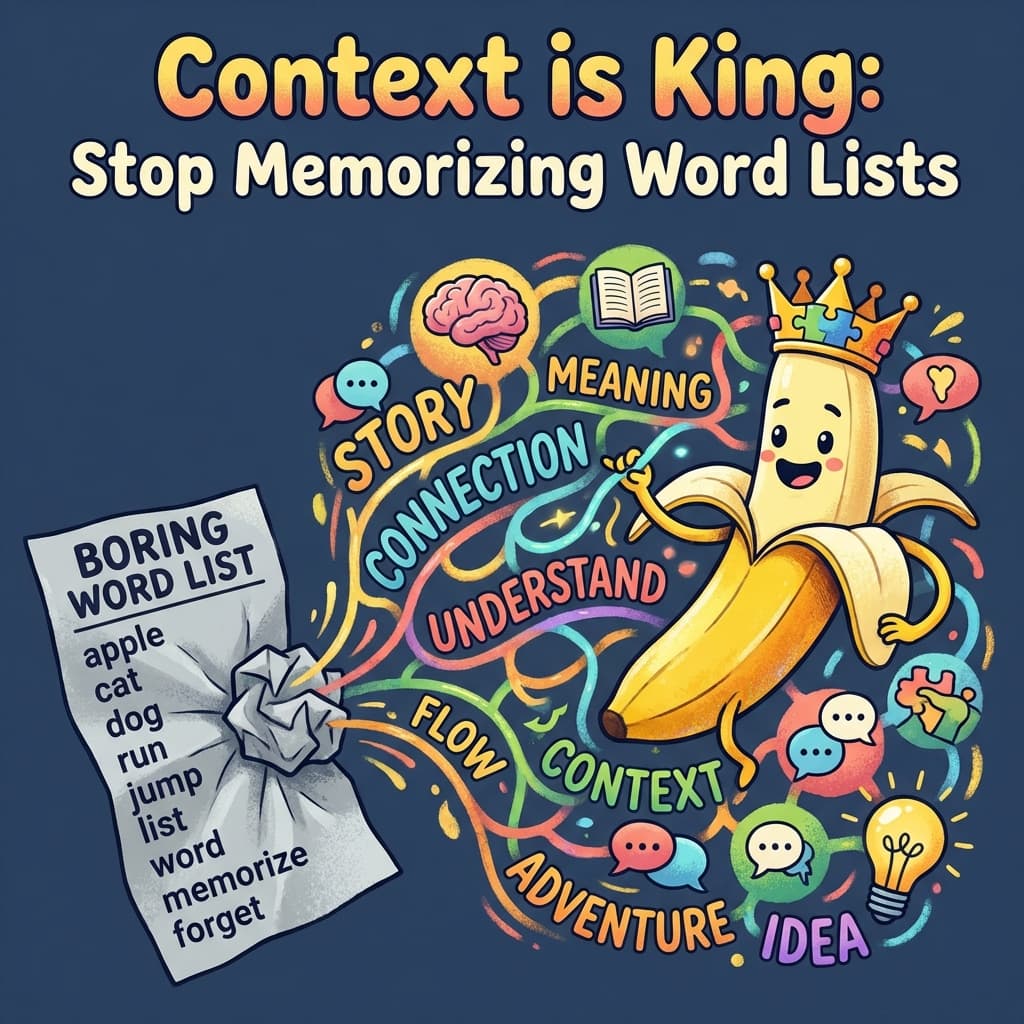
One of the most common mistakes beginner language learners make is obsessing over word lists. They might download "Top 1000 Spanish Words" and try to memorize them one by one. While well-intentioned, this approach often leads to robotic speech and misuse of vocabulary. Why? Because Context is King.

The Problem with Isolation

Words are malleable. Their meaning shifts depending on their neighbors. Take the English word "Run" for example. It has over 600 definitions in the Oxford English Dictionary!

  • Run a marathon (Physical movement)
  • Run a business (Management)
  • Run a compiled program (Computing)
  • Run out of milk (Depletion)
  • A run in my stocking (Damage)

If you essentially memorize "Run = Move fast", you will be confused when someone says "The faucet is running." Learning words in isolation strips them of their soul and utility.

The Solution: Sentence Mining

Instead of collecting words, collect sentences. When you encounter a new word, never write it down alone. Copy the entire sentence.

Bad flashcard:
Front: Embark
Back: To begin a journey

Good flashcard:
Front: We are about to embark on a new project.
Back: 우리는 새로운 프로젝트에 착수하려 한다.

By learning the full sentence, you automatically learn:

  1. Collocations: Words that naturally go together. You learn that you "embark on" something, not "embark at".
  2. Grammar: You see how the verb is conjugated and where it fits in the sentence structure.
  3. Tone: You understand if the word is formal, casual, or slang based on the context.

How to Find Rich Context

So where do you find these sentences? You need Comprehensible Input.

1. Graded Readers: Books written specifically for learners using simplified vocabulary. They provide story-based context that makes guessing meaning easy.

2. YouTube & Netflix: Turn on subtitles (in the target language). When you see a useful phrase, screenshot it. The visual of the scene adds another layer of memory context.

3. Your Own Life (The Loglingo Method): Writing a diary is the ultimate context creation. When you try to describe your day and get corrected, that word is now linked to a personal memory. "I was frustrated because the bus was late." You will remember 'frustrated' because you remember the feeling of the bus being late.

Conclusion

Don't be a collector of dead butterflies (isolated words). Be a gardener. Plant words in the rich soil of sentences and stories, and watch your fluency grow naturally.

#Vocabulary#Reading#Context#Tips